SaaS Online Sales Tax 101 for the U.S.
As online shopping and Software as a Service businesses become more popular, your business may be expanding across multiple states. While growth is essential, it comes with sales tax complications, many of which can result in hefty fines or even the possibility of prison.
Therefore, it’s vital for your business’s health and your liability to understand sales tax on software and SaaS to ensure you’re collecting and remitting your taxes correctly.
Our software and SaaS Online Sales Tax guide covers everything you need to know about being tax compliant in the United States.
SaaS Sales Tax: The Basics
What Is Sales Tax?
Sales tax on software and SaaS is a tax collected by the seller of the product or service and added to the total cost of that purchase. Sales tax is never supposed to be paid out of your software as a service business’s pocket. You merely play the role of the ‘middle man’ between the customer and the governing body.
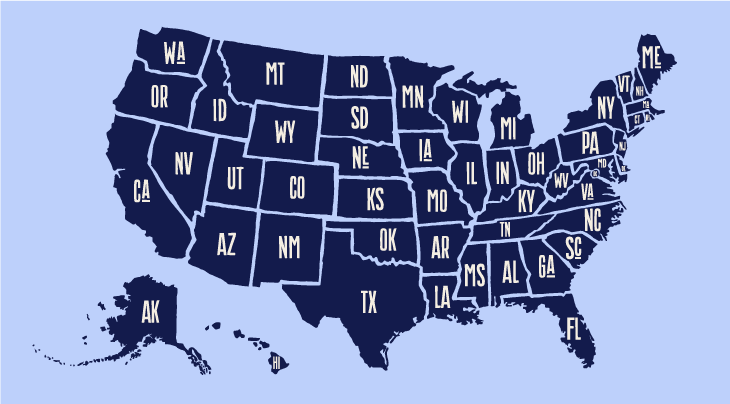
In the United States, how you manage sales tax is determined at the state level. Every state has its own set of rules, which makes things rather complicated.
A product may be taxable in one state but not in another. In addition, in some states, items are taxable when written up together on an invoice but not when listed separately.
How Is Sales Tax Different for Online Sellers?
Online sellers can quickly provide products and services to customers across both state and country borders. As a result, software as a service businesses, which trade online, can find themselves dealing with various sets of laws and rules in different countries or states. In contrast, you have far fewer tax rules to consider if you have a physical store that only operates in one state, region, or country.
When Am I Required To Collect Sales Tax Online?
In the United States, you’re responsible for taxes in the following two instances:
If your business has a sales tax nexus in the same state as your customer.
If the product or service is taxable in that state through remote sales tax.
We’ll chat a bit more about nexus laws later.
For now, it’s essential to take note that if you’re responsible for sales tax on software and sales tax on SaaS in a particular state, you must charge your customers the correct amount of tax and remit the collected taxes back to the state.

Economic Nexus Laws
What Does the Word ‘Nexus’ Mean?
In legal terms, a ‘nexus’ is a connection or link. In most instances, it’s used to establish jurisdiction, prove causation, or solve the conflict of law issues.
What Are Nexus Tax Laws?
In the tax world, nexus laws refer to the connection that a seller must have with a particular area before they’re required to charge and collect sales tax there.
There are two main types of nexus: sales tax nexus and income tax nexus, with the potential for businesses to meet the requirements for one, both, or neither. With a sales tax nexus, a business is liable for collecting and remitting sales tax in that state. With income tax nexus, a business must file income tax returns for that state.
Certain business activities, including having a physical presence or reaching a certain sales threshold, may establish physical nexus within that state. The definition can differ slightly from state to state. However, the general consensus is that if your software as a service business has a brick-and-mortar store or an office in a state, you’re required to collect and submit taxes in that state.
It’s best to check each state’s laws and requirements if you’re not 100% sure whether you have nexus there. The best way to do this is to check with each state’s taxing agency.
Learning the ins and outs of sales tax in the U.S. may seem very overwhelming considering how complex the laws are. However, it becomes more manageable if you use this guide and research the sales tax laws in the different states and jurisdictions.

Comments
Post a Comment